
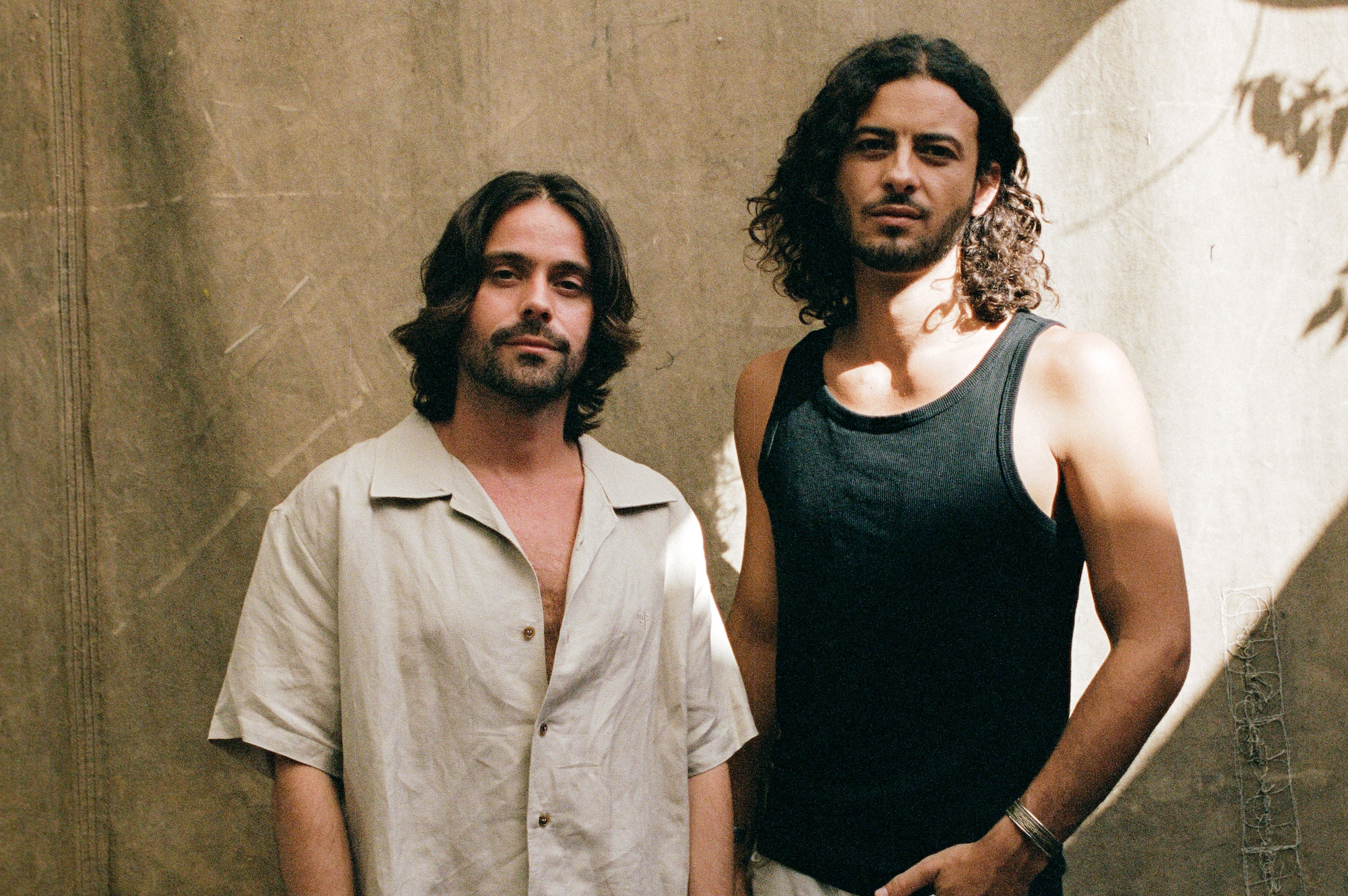
Across the past decade, Mozambo have built a catalogue that sits comfortably between club functionality and musicianship. The French duo, Guillaume and Alexis, came together from different starting points, one trained on piano, the other self taught on guitar, and developed their sound through shared experimentation rather than a fixed scene identity. Early DJ sets and studio sessions evolved side by side, shaping a style that draws from soul, disco and late 90s house alongside contemporary electronic production.
Their releases and remixes increasingly lean into Afro and Brazilian references, shaped by extended travel, collaboration and recording with local musicians. That approach feeds directly into recent projects, including a reinterpretation featuring Martinho da Vila and further work alongside Maz, where live instrumentation and re recorded parts sit inside a modern arrangement framework.
In conversation, the pair talk through how those collaborations unfolded, the practical process of rebuilding a classic vocal into a new structure, and how road testing across Brazil, Ibiza and Asia informed the final version. They also reflect on reworking an Angie Stone track and why instinct still matters more to them than stylistic consistency.
Before Mozambo became a project, what were each of you doing musically and what made you decide to work together?
Musically, we came from slightly different backgrounds. Guillaume had a classical piano education, while I, Alexis, started as a self-taught musician with the guitar. Over time, we began playing together, doing jams, covers and experimenting, which naturally led us to music production. We learned everything by doing, side by side. At the same time, we started DJing, which grew in parallel with our production and our understanding of music. We’ve always shared the same love for music and working together felt very natural. It became a kind of refuge for us, a space where we could create freely. We also had a common dream and we’re very happy to see that the project has kept growing over the past ten years while that passion is still the same.
Where did your shared interest in Afro and Brazilian sounds actually come from, records you grew up with, clubs you played, or people you met along the way?
We’ve both always loved Brazilian music. There’s an incredible richness and diversity in it, and also something very spiritual that really speaks to us. Cinema played a role as well, especially films like City of God, which created a strong emotional connection for us with the country and its music even before we first went there. When we started travelling to Brazil, spending time there, playing shows, meeting people and doing jams with local musicians, everything became much deeper. We didn’t just listen to Brazilian music anymore, we began to understand it from the inside. We were already fans before, but being there strengthened that connection and made it a central part of our musical identity.
How did this collaboration on No Embalo da Vila first take shape, and who started the conversation?
This collaboration started after we had already worked together with Maz on the Gilberto Gil remix. We really enjoyed that experience and there was a strong creative synergy. At some point, we had this idea for a new reinterpretation, so we started working on it and sent it to Maz. He immediately loved it and we continued building the track together. It all happened very naturally. It took a bit of time because we made several changes along the way, including re-recording guitar parts, but the process always felt fluid and we’re very proud of the final result.
When you received the parts from Martinho da Vila, what was the first thing you did with them in the studio?
The first thing we did when we received Martinho da Vila’s parts was to isolate the vocal and select the section that inspired us the most. We used that as the starting point to rebuild our own structure and create our version of the track. We removed the other original elements, built a new instrumental around the voice and integrated it into a completely new mix. After that, we re-recorded Brazilian guitars to bring back an organic Brazilian touch and keep a connection with the spirit of the original song.

What did Maz add that genuinely shifted the direction of the track?
Maz helped us a lot with the structure of the track and with many small details. He brought a strong overall vision in terms of arrangement and energy. The Brazilian guitars we added at the end were recorded in Rio and it was his idea to re-record those elements live to give the track a more organic feeling. Beyond that, it was a real back-and-forth process. We exchanged feedback constantly and worked hand in hand until we reached a version we were all happy with. It was a very smooth and enjoyable collaboration.
Was this one quick and instinctive, or did you end up rebuilding it several times before it felt right?
The core idea for the track came very quickly. We built an initial draft and the main direction was clear almost immediately. After that, the process took more time because of the feedback, testing it in our DJ sets and re-recording the live guitar parts. The detailed work on the mix, arrangement and structure required more patience. So the original intention was very instinctive and fast, but the refinement and final touches are what took the longest.
Did you test it out while DJing before release, and did the reaction change anything in the final version?
Yes, we tested the track many times before the release. We played it in our DJ sets in Brazil, Ibiza, Saint-Tropez, Chile, Singapore and several other places. The reaction was always very positive, which gave us a lot of confidence and made us even more motivated to finish the track and release it.
You’ve got a reworking of an Angie Stone record coming soon. Does approaching a well-known song change how careful or bold you are in the studio?
We’re not necessarily more careful when working on a well-known track. The Angie Stone rework was made almost two years ago from a very genuine place. We’ve always loved the original and wanted to bring it into our DJ sets with our own identity. At first we made it just to play in Ibiza, but the reaction was so strong that we started considering an official release. The support we received, especially from artists like Carl Cox, was very meaningful. We usually work from the heart and follow our intuition rather than overthinking.
After these collaborations, what do you want Mozambo to sound like a year from now?
We always want to keep our identity and stay authentic in our choices. We don’t want to define a specific style for the future. We prefer to follow what feels right in the moment. We like to evolve, explore and avoid putting ourselves into boxes. Both DJing and producing are opportunities to share diversity with people. We have wide influences and we want to keep making music that we truly love and enjoy sharing. That’s what matters most to us.