
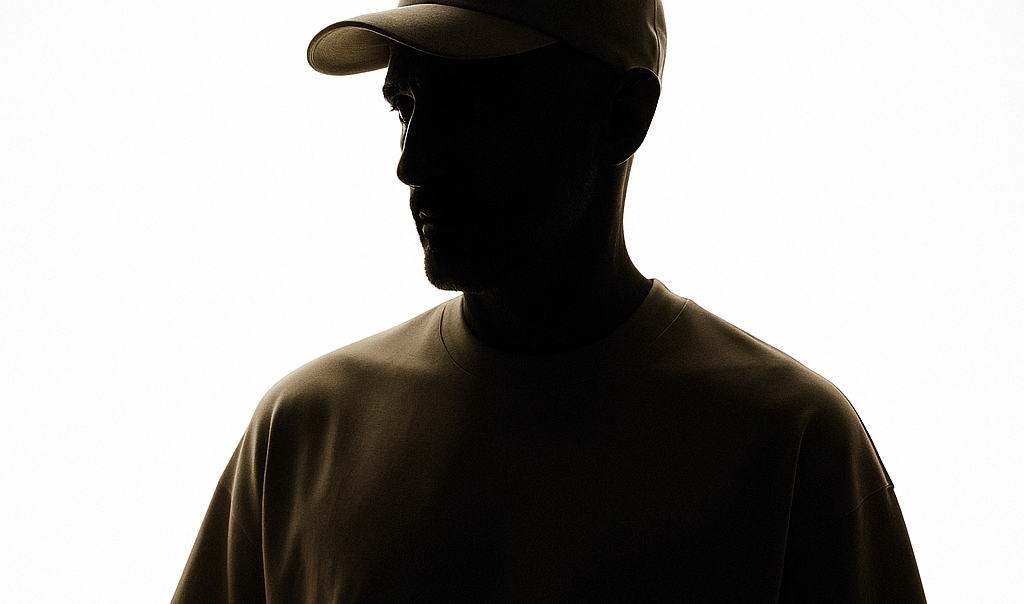
Bazalte approaches melodic house with a quiet sense of purpose. His debut EP, Genesis, unfolds in three measured pieces that carry both intimacy and scale, shaped by texture, voice, and space rather than big gestures.
In our conversation, he talks about finding clarity in limitation, drawing on Mediterranean musical lineages, and resisting the need for external validation. There’s a focus on emotion as something understated and durable. Genesis feels like the beginning of a broader vision, one that’s as concerned with shared physical experience as it is with solitary reflection.
Here, Bazalte reflects on the environment he creates in, the influences that guide him, and how he wants his music to be felt.
What kind of environment do you need to make music? Are you the type to build in silence, or do you need life happening around you?
For years I searched for the “perfect studio,” thinking better gear would unlock better music. I realized mindset matters more than equipment. You can make something meaningful with a laptop and AirPods if your intention is clear. I often start at night, alone in my bed — that’s where ideas flow without pressure. Later, I move to the studio to sculpt the track with a wider sound palette.
There’s a calm confidence to Genesis. Did it take a while to find that sound, or did it come together naturally once you started?
The confidence came when I stopped chasing validation. This project is deeply rooted in Mediterranean syncretism — ancient voices meeting futuristic textures. I’m not writing for charts or trends. I just follow a mood that feels true. If it resonates with me, someone out there will connect with it too. That freedom gave Genesis its calm strength.
You seem to build emotion from really precise details. Do you start with those textures, or do they appear once the track starts taking shape?
I believe electronic music should return to beauty and emotional honesty. I never start with a beat, because a beat alone feels like an empty grid that limits my imagination. I usually begin with a texture, a vocal, a harmonic atmosphere. That sets the emotional intention — the rhythm grows around it naturally.
Outside of electronic music, what artists or records do you keep returning to for inspiration?
I often return to composers like Ryuichi Sakamoto or Armand Amar, they understand how to say a lot with very few elements, and they treat sound almost like a spiritual language. And also I go back often to Mediterranean recordings, for example Dhafer Youssef.
You’ve mentioned influences that come from both club culture and film scores. Do you see your music more as something to move to, or to listen to alone?
It’s definitely made to move to but I struggle with the current culture where people stand still filming everything. I miss the authentic club era where dance was communion, not performance for a screen. That’s why I’m preparing a live set designed like a ritual gathering : bodies, sound, and presence. Phones will stay in the pocket. The goal is to feel something together, not document it alone.
What’s the most surprising thing you’ve learned about your own creative process while making Genesis?
That the music was already inside me. I just didn’t trust it before. For years I listened too much to trends and algorithms, and it blocked creation. Genesis is the moment I stopped asking what works and started creating what needs to exist — something honest, built to last, not engineered for quick consumption.
If you could have one visual artist or filmmaker reinterpret the EP, who would it be and why?
Sofia Coppola, for the intimate, emotional restraint she captures — she would translate the quiet vulnerability of Genesisin a subtle way. And Terrence Malick, because he has a deep sense of symbolism and could visually explore the meeting of ancient and future worlds, which is at the core of this EP.
Your sound feels very controlled, do you ever let chaos in intentionally, or is it all about order for you?
It reflects my personality, but it’s not about control for its own sake. I didn’t want to sound shocking or overly experimental. My goal was to create something welcoming, something that gathers rather than divides listeners into niche camps. I believe emotion can be powerful without being violent.
When you think about what comes next after Genesis, what’s exciting you most, new sounds, collaborations, or just time to experiment again?
The next step is the live set. It will be a one-hour ritual with a unique stage element : minimal, iconic, almost ceremonial. It’s designed to feel like a club experience and a spiritual immersion at the same time. The music is ready; now I’m finalizing the staging. That’s where the next evolution begins.
Follow Bazalte on Instagram: https://www.instagram.com/bazalte_official