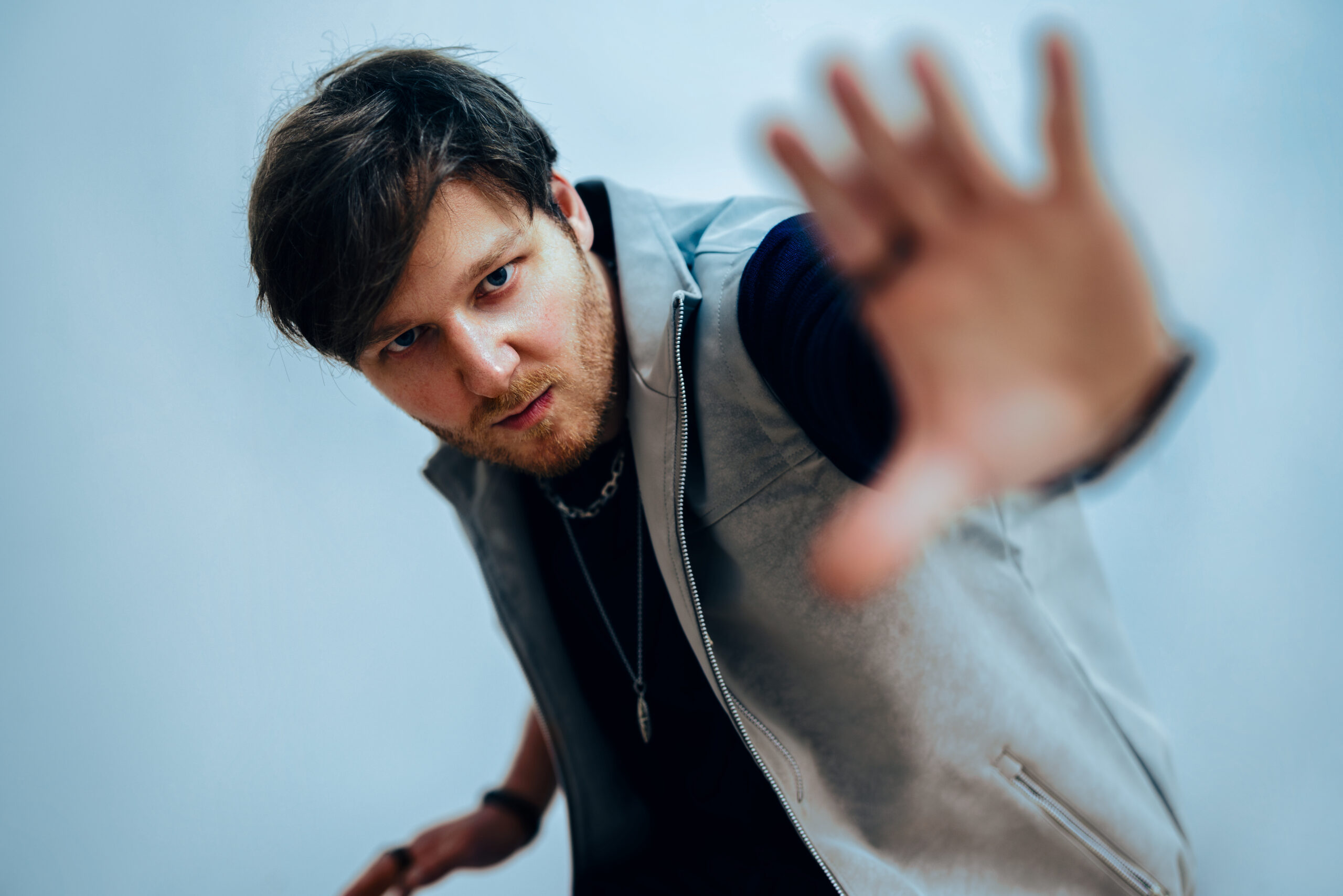

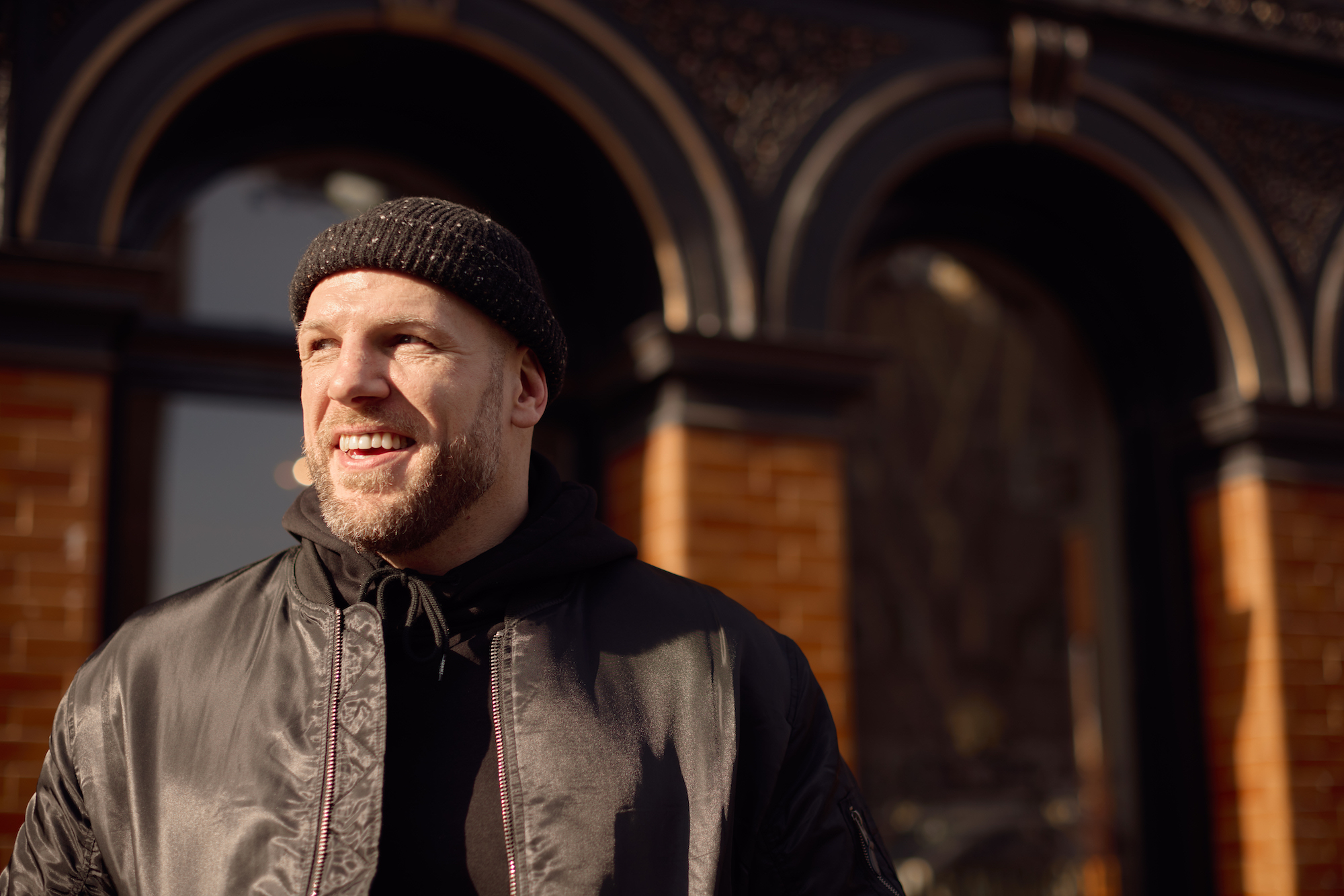
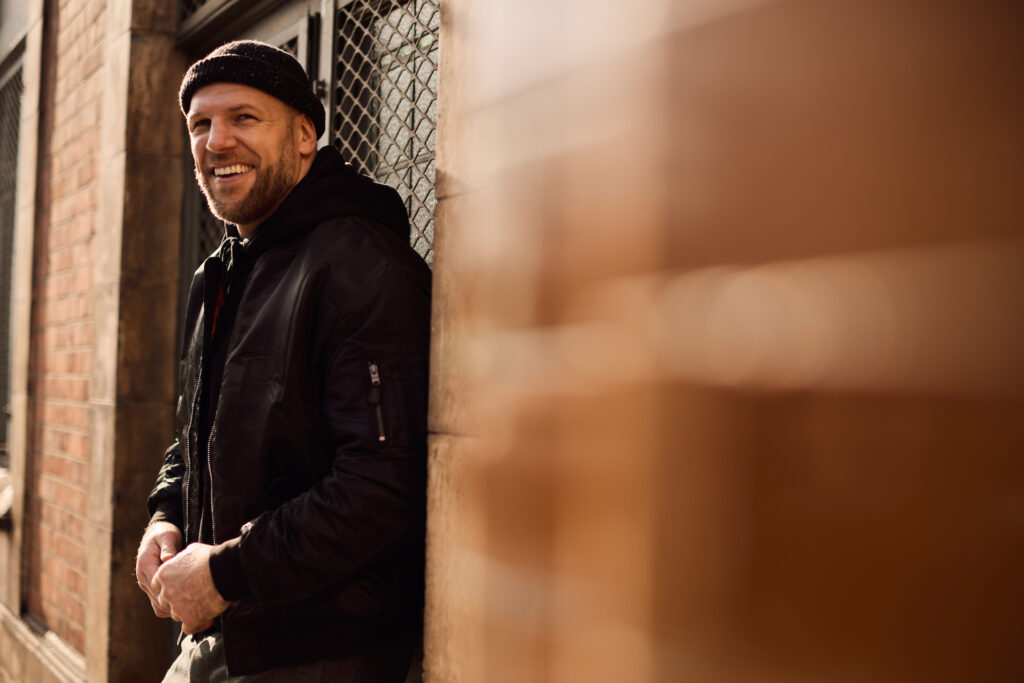
HASKELL’s shift from elite rugby to the booth might seem unlikely—but listen closely, and the same discipline, drive, and detail run through both careers. Since retiring from sport, he’s carved out a space in tech-house’s increasingly saturated world with sharp, groove-led productions and a focus on rhythm that’s rooted in his garage upbringing.
His past work with heavyweights like Mark Knight and Gene Farris reflects both his collaborative mindset and his respect for house music’s foundations, while recent releases on labels like Toolroom, In Rotation, and Myth of NYX hint at a sound in constant evolution.
With a new peak-time weapon, The Power Of Speech, landing via Insomniac’s In Rotation imprint and an ongoing push for originality in a genre often stuck on repeat, HASKELL speaks here about finding balance between club functionality and commercial ambition, reading the room, resisting shortcuts, and why sometimes, Taylor Swift wins out in the car.
Your work has always operated within the gravitational pull of tech-house’s low-end heft, but there’s an almost surgical precision to the way you shape basslines and percussion. How has your relationship with rhythm evolved over the years, and where do you find yourself drawn now?
Rhythm is everything for me in house music. I grew up on garage—the swing, the skippy percussion—and that really shaped how I think about groove. Over time, I’ve focused more and more on the DNA of my tracks: how the drums feel, how the groove moves. That skippy energy is something I always come back to, but I’ve learned to dial it in depending on the project. Some labels call for tighter, minimal grooves; others give you space to push it further. I’m always evolving, but rhythm remains the anchor.
Your forthcoming release on In Rotation—what was the initial spark for this track? Did it start as a rhythmic exercise, a bassline obsession, a sample that wouldn’t let go? And how did you push it beyond the familiar tech-house framework?
It started with hearing a few tracks that paired powerful, almost diva-like vocals with rhythmic stab sounds. That combo really stuck with me, and I wanted to build something that could hold both those elements but still hit hard in a peak-time setting. It wasn’t just about the vocal or the groove—it was about giving DJs tools to build energy. Like the cowbell in the breakdown: small detail, but it gives them something to work with. I wanted something DJs could really manipulate on the dancefloor, while still holding that vocal presence.
The Myth of NYX has been steadily carving out a space for high-grade, nocturnal club music. What drew you to the label, and what does this particular track say about where your sound is heading?
Love Dealer was a big moment for me. Working with Myth felt like a natural fit—they’ve got a sound that’s deep and club-focused, but still leaves room for expression. The vocal from David LaSalle was a standout—talking about different kinds of love, emotional, physical, even chemical. It gave the track a concept to work around. For me, it had everything I’m chasing in my sound right now: a tight groove, a hook that sticks, and rhythmic elements that give each section its own energy. It felt like another step forward.
You’ve worked with veterans like Mark Knight and Gene Farris—two artists with long, shape-shifting histories in house music. What do you take from collaborations like these?
My mindset from sport has always been: if someone’s doing what you want to do—better—then collaborate and learn. Working with Mark and Gene, you see not just the quality of the music, but the consistency, the branding, the work ethic. There’s a lot to learn—not just about sound design, but about how to sustain a career. People talk about overnight success, but this game’s about turning up every day and putting in the graft.
Your DJ sets carry an elastic quality—never too rigid, always shifting between stripped-down grooves and heavier, peak-time moments. When you’re performing, how do you navigate that line between discipline and spontaneity?
It starts with reading the crowd. Sometimes you’re lucky and they’re there for your sound—other times you’ve got to be selective and earn their trust. I’ve always believed in building that relationship first, then layering in the performance side. Back in the day, DJs were tucked away—it was just about the music. That’s still the core of it. Technology and staging have changed the dynamic, but without the right tracks, none of that matters.
You’ve released across an impressive spread of labels—Toolroom, In Rotation, Love Juice, D4Dance, and Stashed—all of which sit within different corners of the house spectrum. What makes a label feel like the right home for a track, and how much do you shape a release with a particular audience in mind?
Music isn’t like sport—you don’t play for one team. You make tracks that fit a sound, and hopefully the right label picks them up. I’ve had great releases on labels like Toolroom and In Rotation, but there are still places I’d love to get music on—Black Book, Hellbent, Insomniac’s sister labels. That said, trying to write for a label can be a trap. You’ll lose your mind scrolling through their catalogue trying to reverse-engineer their sound. I try to focus on making music I’d want to play myself. That’s when it works.
There’s been a lot of conversation around tech-house’s stagnation—the same formulas, the same drops. But your best tracks feel kinetic. What do you think the genre needs more of?
Tech house definitely feels like it’s in a holding pattern. There’s a lot of recycling—old vocals, familiar drops. You see it in Afro House too—classic songs bolted onto new grooves. It works, but I’ve tried to stay away from that formula. I’m more interested in finding a sound that’s original, something that might become a future classic. It’s hard—very few manage it—but that’s where the challenge is. There are still voices pushing things forward, like Clementine Douglas, and that gives me hope.
Your music has landed on radio giants like BBC Radio 1 and Kiss FM, yet it’s deeply rooted in club functionality. How do you think about that balance—between making tracks that translate in big rooms versus those that work in a more immersive listening environment?
I’ve always made music I want to DJ, not necessarily radio-friendly tracks. That’s just where my head’s at. Of course, I’d love to have something that crosses over, but it’s not the focus. I look at someone like Sonny Fodera—his ability to make tunes that kill in the club and rack up millions of streams is unbelievable. He’s nailed that balance. Working with people like Clementine Douglas helps too. That’s something I’d be open to exploring more, but you’ve got to stay true to what you’re about.
You’ve played across radically different settings, from sun-drenched Ibiza terraces to more intimate, late-night spaces. How does that context influence what you play?
Context is everything—but it’s about the audience. If you’re playing a sunset slot and the crowd’s got that laid-back, Balearic vibe, then I’ll lean into that with tribal rhythms or deep tech. Other times, it’s all about vocals and disco energy. You’ve got to read the room quickly and adjust. Never take your eyes off the crowd. If you’re lucky enough to play to an audience that already knows your sound, you’ve got more freedom—but the trust still has to be earned.
Looking ahead, are there unexpected influences creeping into your process—things outside of house music that are shaping your sound in ways you didn’t anticipate?
Influences come from everywhere. My daughter’s obsessed with Taylor Swift, so half the time it’s “Daddy music” or “Tay Tay music” in the car—and Tay Tay usually wins. So I end up listening to a lot of stuff I wouldn’t normally seek out, and I think that’s a good thing. Hooks, songwriting, structure—it all feeds in. I’ve still got that hunger to improve, and part of that is staying curious. Listening wide, staying inspired, and looking beyond just the immediate circle of house music.
Haskell – The Power Of Speech is out 01 April on In Rotation