
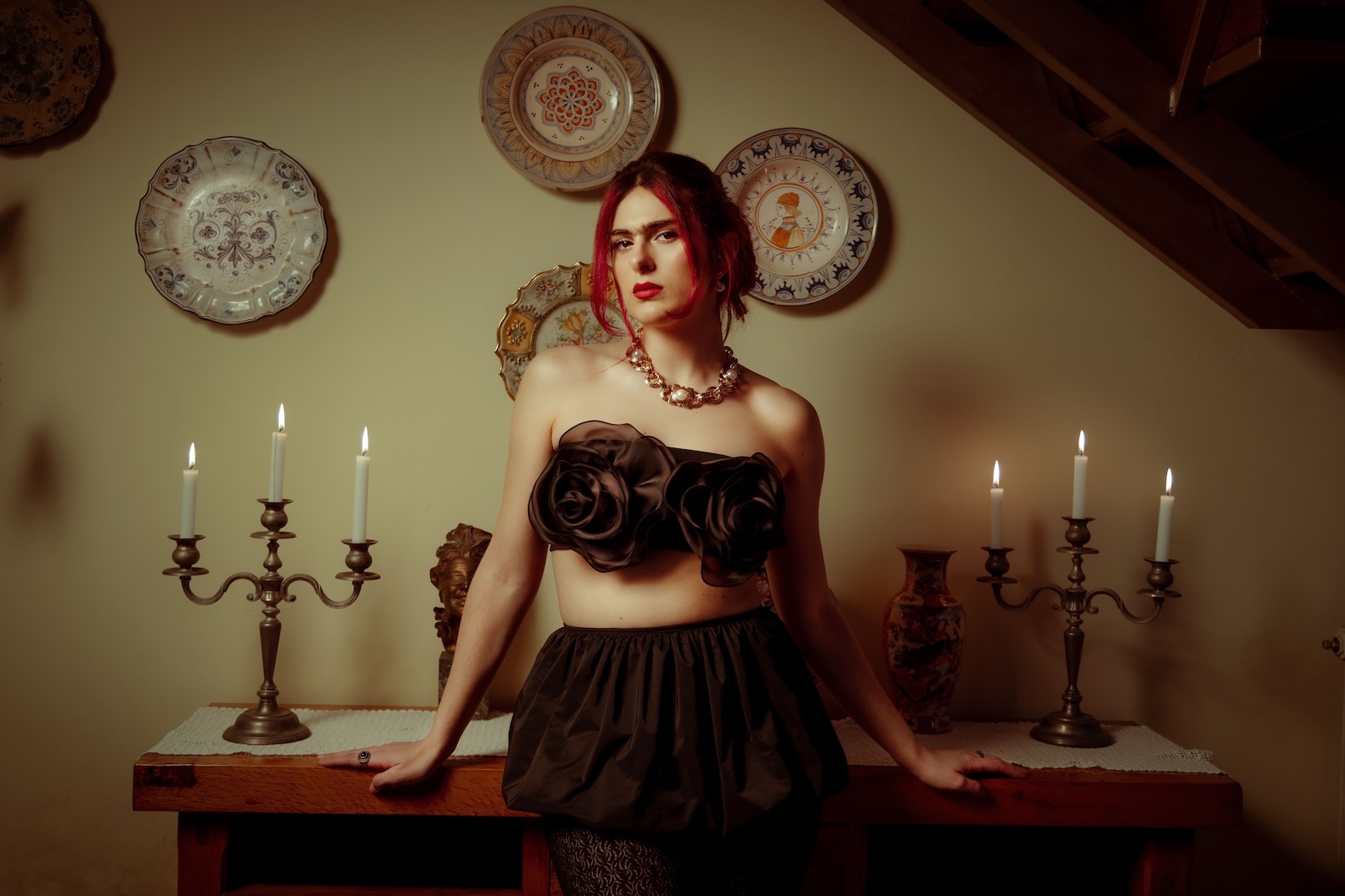

With a career that spans early television exposure in Italy to major international collaborations in the electronic world, Alessia Labate has steadily built a reputation as both a compelling vocalist and thoughtful songwriter. Her latest release, Not Home with Alan Walker, sees her lean into a more introspective and emotionally driven space, reminding listeners that vulnerability can be just as powerful as peak time energy. We caught up with Alessia to talk about growth, emotional honesty in dance music, and how she balances global stages with deeply personal storytelling.
Our readers love understanding the artist behind the music. How would you describe Alessia Labate today compared to when you first started releasing records internationally?
When I first started, I wasn’t as advanced technically in my writing or my singing, but I was already able to let my raw emotions shine through. After facing many closed doors, I learned how to accept rejection, be patient, and take some distance from my own music. That helped me understand where I had gaps to fill.
That mindset still keeps me excited today. Once you start improving yourself, it becomes addictive. You want to learn more, explore more, grow more. That constant evolution is what brings me happiness in what I do.
Not Home with Alan Walker leans into emotion rather than peak-time energy. Why was it important for you to explore that more introspective space on this release?
I think emotional honesty is what makes music last, and Alan Walker’s music has always aimed for that. It relies on feeling. That felt important to me, especially in a world that often prioritizes impact over depth.
Exploring a more introspective space allows listeners to connect in a quieter, more personal way. Sometimes that kind of connection is even stronger than the loudest drop.
From your perspective as a vocalist and songwriter, what makes Not Home stand out within Alan Walker’s wider sonic universe?
It reminds me of the sound Alan Walker first became known for. In a world where everything feels hyper-processed, it’s refreshing to return to something more raw and emotionally direct. I think that’s why fans are resonating with it so much. It feels honest.
A lot of dance music today is built for fast consumption. How do you approach creating songs that still feel timeless and emotionally resonant?
I have to admit that my best melodies come from moments when I completely let go and they simply come out of me, almost like I’m connecting with a higher power guiding me. Those songs are usually the ones people resonate with the most.
I try not to over-engineer the songwriting process. If it feels right, it’s right. Being a professional helps bridge the gap between emotion and execution, but letting go is always the first step for me.
You’ve performed at major festivals and worked with global names, yet Not Home feels very personal. How do you balance vulnerability with scale in electronic music?
It’s quite natural for me because I’m a very emotional person and music is my favorite outlet. I also have strong self-belief. It might sound a little delusional sometimes, but it helps me stay focused and confident in my craft.
Even when the stage is big, the emotion is personal. I just focus on telling the truth in my voice, no matter the scale.
How did your Italian roots influence the way you interpret melody and emotion on a track like Not Home?
Even though international pop and EDM are a huge part of me, I feel very lucky to have grown up in an Italian family where music was always present. Italian music, especially from the 70s and 80s, is rich in melody, strong themes, powerful voices, and arrangements that really wrap around you. People actually play instruments, and you can feel it.
Even our folk music is beautiful. It’s simple and direct, but emotionally powerful and deeply human. Those influences definitely give me a slightly different perspective compared to many of my English-speaking peers. Melody and emotion always come first for me.
For fans discovering you for the first time through this collaboration, what do you hope they hear in your voice or writing?
I hope they hear honesty. I hope they feel that what I’m singing is real and lived. And I hope they understand that my music covers many emotional shades. I’m not just one mood or one sound. If they connect to that depth, then they’ve truly discovered me.
Visual identity and storytelling are becoming increasingly important in dance music. How do visuals, aesthetics and mood play into your creative process?
I love working on visuals because they allow me to experience the song in a new way and expand its meaning. Even though I enjoy big-budget content shoots, I secretly love working with low budgets. It forces me to think outside the box and push my creativity further.
I usually do my own makeup and styling, and after years of trial and error and collaborating with professionals, I’ve learned so much. Exploring visuals empowers me creatively just as much as writing does.
You move fluidly between club-focused projects and more melodic, song-driven releases. Where does Not Home sit for you in that spectrum?
To me, Not Home is a universal pop song that almost anyone can connect with. It’s not dividing, it’s uniting. That’s something Alan Walker’s music has always done, and it’s part of why he resonates with so many people.
Just like my personality, my music can sometimes be a little controversial or unexpected, and I like having that freedom.
Many readers are often producers and DJs themselves – what advice would you give to artists trying to build meaningful collaborations rather than chasing names?
Energy matters more than big credits. That’s actually the philosophy behind Sevensongs Camp, a songwriting camp I started with my best friends a couple of years ago. We organize camps in beautiful locations and spend a whole week making music together, just for the love of it.
When you choose people based on talent, energy, and character, you always end up creating meaningful songs. If you stay true to that, sooner or later the big opportunities will come without compromising your integrity.
With Not Home now out in the world, how has the reaction influenced your confidence or direction as an artist?
It gave me a huge boost of motivation to keep going. At the same time, I’m trying to stay grounded and not tie my self-worth to external reactions. After a couple of weeks, I actually experienced a bit of burnout, which I’m slowly recovering from. I see it as a sign that I got a little too excited and pushed myself too hard.
It’s interesting to see how my stress threshold changes over the years. Understanding that balance is a life goal for me. I want to build a life and career where I can fulfill my dreams while respecting myself. Every breakdown feels like an opportunity to learn more about who I am and how I relate to the world, and ultimately a step closer to my breakthrough.
Looking ahead, are you more excited by the idea of pushing deeper into emotional songwriting, returning to high-energy dancefloor moments, or finding a new space between the two?
Finding my own space between the two is definitely the goal. I want to make both coexist, maybe even through different projects. I love making music, and I love having fun while doing it. My goal is to build a life and career where I’m able to enjoy the process most of the time.
As Alessia continues to carve out her own lane between melodic depth and dancefloor energy, Not Home marks another step in an artist journey defined by evolution rather than expectation. With a clear sense of identity, a growing global audience, and a commitment to honesty in both her writing and performance, she is proving that emotional resonance still has a powerful place in electronic music’s future.