

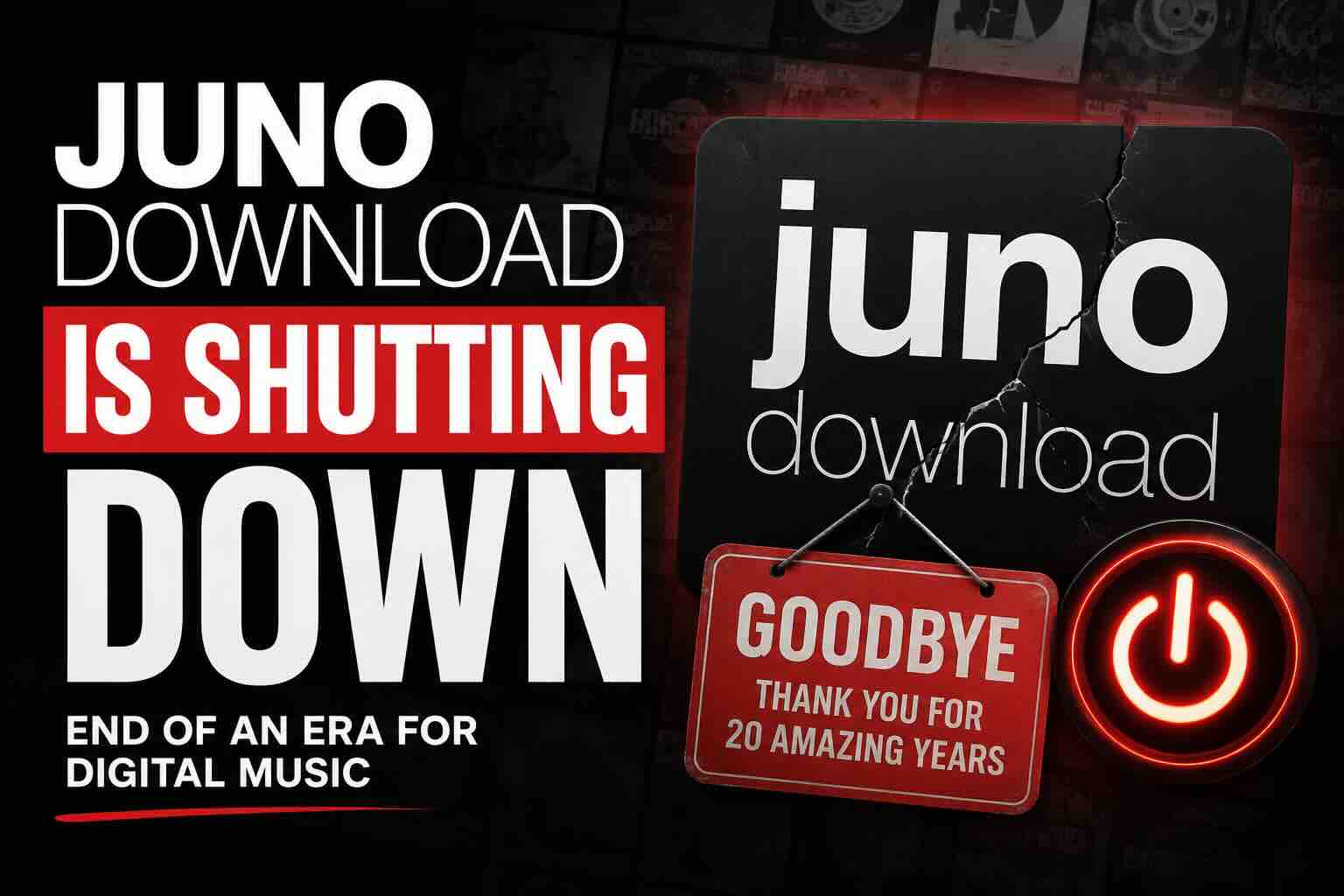
The dance music industry has lost one of its longest-running digital institutions.
Juno Download, the influential electronic music download store that served DJs and collectors for nearly two decades, has officially shut down operations with immediate effect. Visitors to the platform are now greeted by a farewell message that reads:
“It’s been our privilege to share some of the most incredible music from the most amazing artists, but we’re sorry to say, that the time has come to say goodbye.”
The statement continues by directing users toward alternative platforms including Beatport, Traxsource, Mixupload and Volumo, while assuring customers that previously purchased downloads remain accessible through their accounts.
The closure came as a surprise to many users. There was no public countdown, advance warning, or announced wind-down period. For a platform that helped define the digital download era for electronic music, the sudden goodbye has sparked widespread discussion across the DJ community.
Why Is Juno Download Closing?
Although Juno Download has not published a detailed breakdown of its business decision, comments from COO Lucas Garcia provide the clearest explanation.
According to Garcia, streaming has become the dominant model for digital music consumption. At the same time, artists and labels have increasingly embraced direct-to-fan platforms such as Bandcamp and social media-driven sales channels. As a result, the role of traditional digital music webstores has become significantly less important than it was during the 2000s and early 2010s.
In simple terms, Juno Download found itself squeezed between two powerful trends:
- Streaming services becoming the default choice for music listeners.
- Direct-to-fan ecosystems reducing the need for centralized download stores.
The result is a shrinking market for standalone download retailers.
A Key Platform in Dance Music History
Launched in 2006, Juno Download became one of the most important download destinations for electronic music alongside Beatport and Traxsource.
For many DJs, it offered a valuable alternative. The platform was known for carrying deep catalogues across house, techno, drum & bass, garage, trance, breaks, disco and countless niche genres. It often stocked releases that were difficult to find elsewhere and built a reputation for competitive pricing.
At a time when digital downloads were replacing vinyl as the primary format for working DJs, Juno Download became an essential part of the electronic music ecosystem.
Its closure marks the end of a chapter that helped shape modern DJ culture.
What Happens Next?
The shutdown only affects Juno Download’s digital music store. Juno Records, the company’s long-running vinyl and physical media business, remains operational.
Meanwhile, competitors such as Beatport, Traxsource, Mixupload and Volumo are likely to absorb much of the platform’s audience. However, many industry observers believe the bigger beneficiary may be Bandcamp, which continues to grow as a preferred direct-to-fan marketplace for independent artists and labels.
The closure also raises broader questions about the future of music ownership. While streaming dominates consumer listening habits, many DJs still rely on downloaded files for performance reliability, collection building and long-term access.
The Bigger Picture
Juno Download’s shutdown is more than the disappearance of a music store. It reflects a larger shift in how electronic music is discovered, purchased and consumed.
Twenty years ago, digital download stores represented the future. Today, streaming subscriptions, direct artist support and platform ecosystems dominate the conversation.
For thousands of DJs, Juno Download was where they discovered hidden gems, built libraries and followed underground scenes long before algorithms took over music discovery.
Its farewell message may be brief, but its legacy in dance music runs deep.
As one of the last major independent download stores exits the stage, the electronic music industry is left asking a difficult question:
If even Juno Download couldn’t survive the streaming era, what does the future look like for digital music ownership?